

Review of Schengen Entry-Exit System urgently needed to avoid systemic disruptions impacting passengers
Brussels: ACI EUROPE yesterday called upon the European Commission, eu‑LISA, Frontex and Schengen Member States to urgently address the mounting operational issues with the implementation of the Schengen Entry‑Exit System (EES), which started on 12 October 2025.
The progressive scaling‑up of the registration and capture of biometric data from third country nationals entering the Schengen area has resulted in border control processing times at airports increasing by up to 70%, with waiting times of up to 3 hours at peak traffic periods. This is severely impacting the passenger experience — with airports in France, Germany, Greece, Iceland, Italy, Portugal and Spain especially impacted.
This situation reflects the combination of several operational issues with the deployment of the EES including:
- Regular EES outages undermining the predictability, regularity and resilience of border operations.
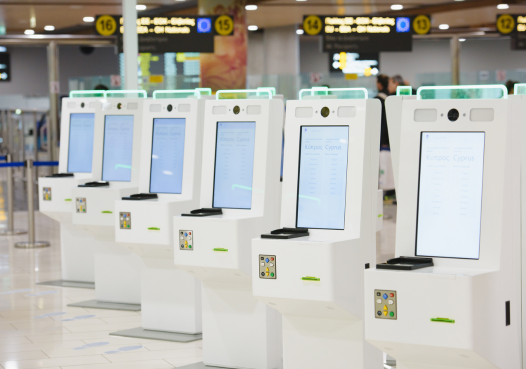
- Persistent EES configuration problems, including the partial deployment or unavailability of self‑service kiosks used by travelers for registration and biometric data capture.
- The continued unavailability of Automated Border Control (ABC) gates for EES processing at many airports.
- Unavailability of an effective pre‑registration app.
- Insufficient deployment of border guards at airports, which reflects acute staff shortages at the authorities in charge.
Olivier Jankovec, Director General of ACI EUROPE warned: “Significant discomfort is already being inflicted upon travelers, and airport operations impacted with the current threshold for registering third country nationals set at only 10%. Unless all the operational issues we are raising today are fully resolved within the coming weeks, increasing this registration threshold to 35% as of 9 January — as required by the EES implementation calendar — will inevitably result in much more severe congestion and systemic disruption for airports and airlines. This will possibly involve serious safety hazards.”
He added: “We fully understand and support the importance of the EES and remain fully committed to its implementation. But the EES cannot be about mayhem for travelers and chaos at our airports. If the current operational issues cannot be addressed and the system stabilised by early January, we will need swift action from the European Commission and Schengen Member States to allow additional flexibility in its roll‑out.”